ROBOTICA Studio 1.0 - The Beginning
Tiago Carvalho
Mar 10, 2026
ROBOTICA Studio goes 1.0! 🚀
We couldn't be more excited for this release.
After carefully studying the market, observing industry trends, and keeping pace with the latest technological advancements, our team arrived at a clear vision: we believe there is a tremendous opportunity to bring value to the commercialization and conceptualization phase of automation systems.
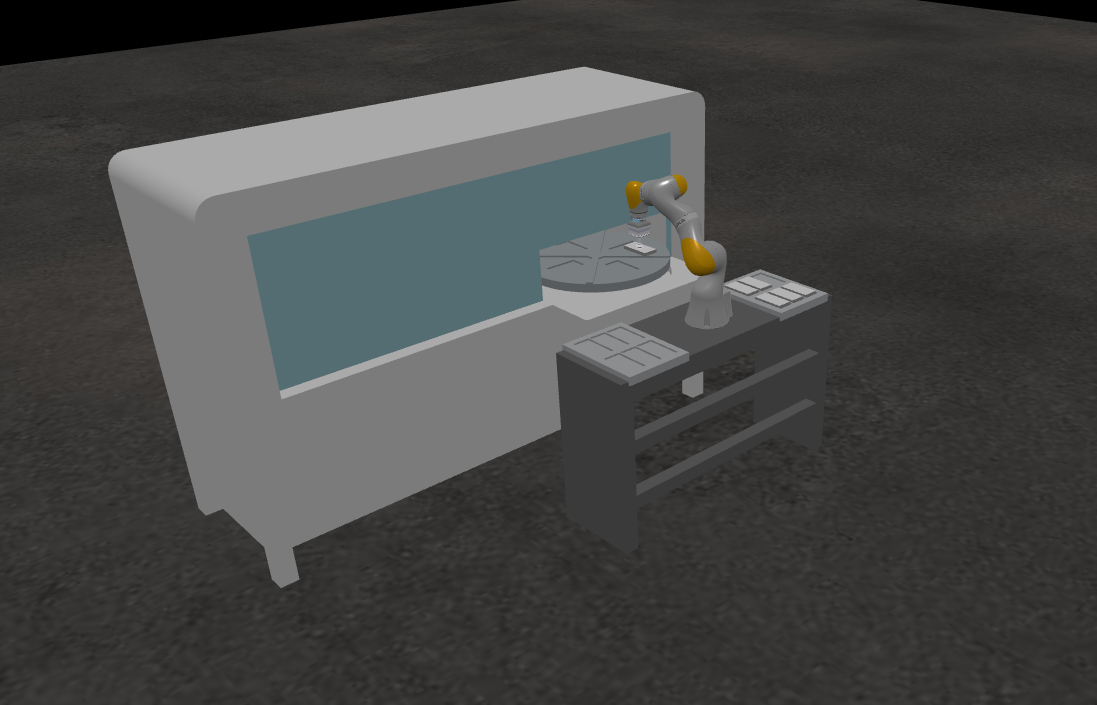
This release marks Augmented Labs’ first step into the automation market, introducing an application capable of simulating almost any machine or mechanism involved in modern automation.
We are proud to present a concept built around versatility, ease of use, and above all, agility. In the world of manufacturing, as we all know, every minute counts and every second makes a difference.
That is why we developed a lightweight, web-based platform that can be accessed from anywhere in the world. It allows teams to collaborate while designing automation concepts that are functional, validated, and ready for real-world deployment, reducing risks and preventing costly issues later in the process. By visualizing and simulating these concepts early, teams can also communicate ideas more clearly, improving alignment and confidence among both internal and external stakeholders.
This release brings:
- A new entity-component system
- Cloud Synchronization
- Embedded physics engine
- Low-code programming
- Signal based system for component interaction
Entity-Component System
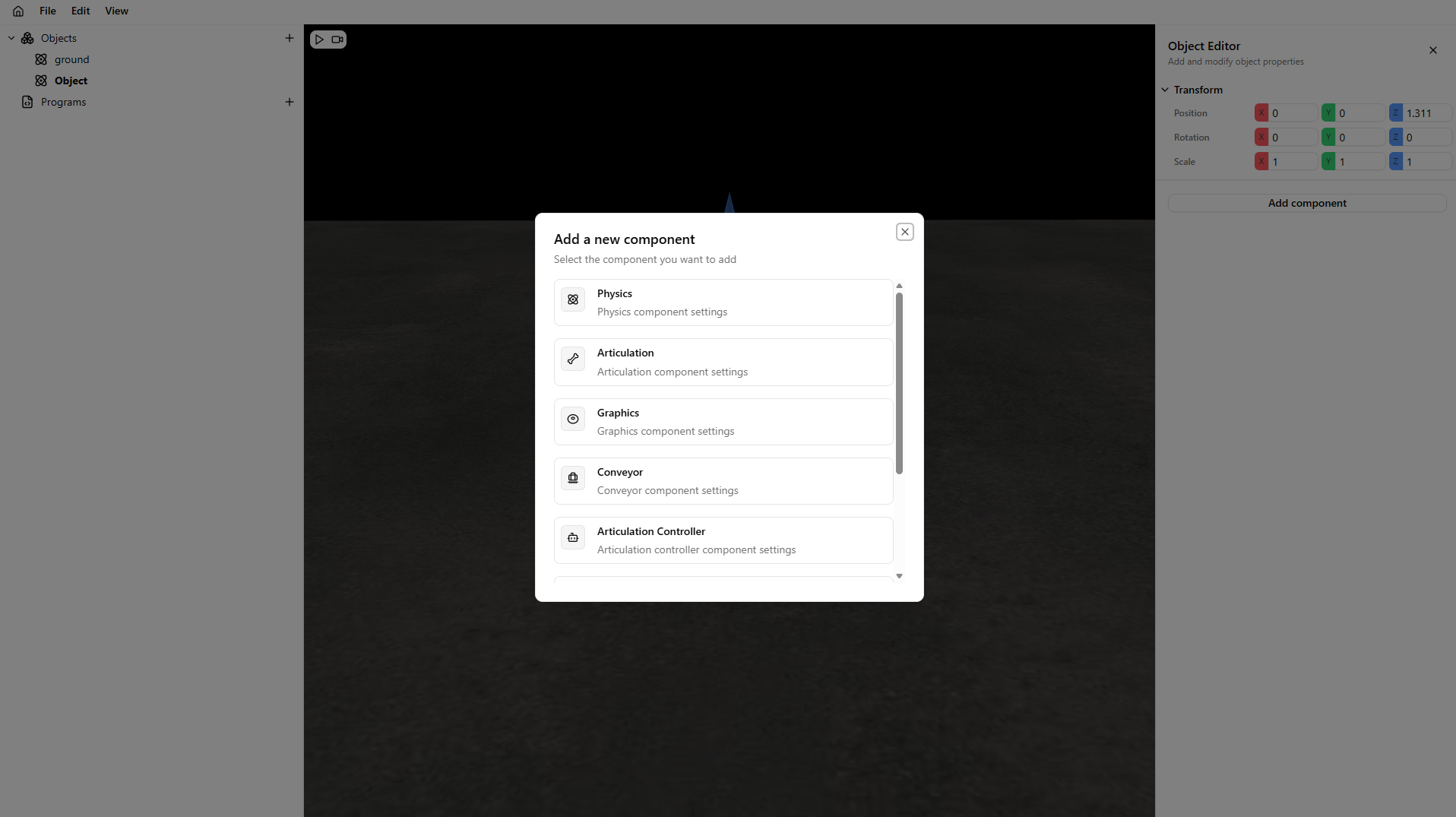
The object scene inside ROBOTICA studio is based on a popular software architecture design. Each object inside the scene is called an Entity. To add behaviours to an Entity, you can add Components.
In addition, we introduce a parent-child system where you can organize and move your entities as you see fit. This makes it closer to what we typically see in a CAD software, and we take advantage of that when importing 3D models.
You can mix and and match a whole set of components, each with very simple behaviours. The combination of simple behaviours can produce systems with a lot of complexity.
Embedded Physics
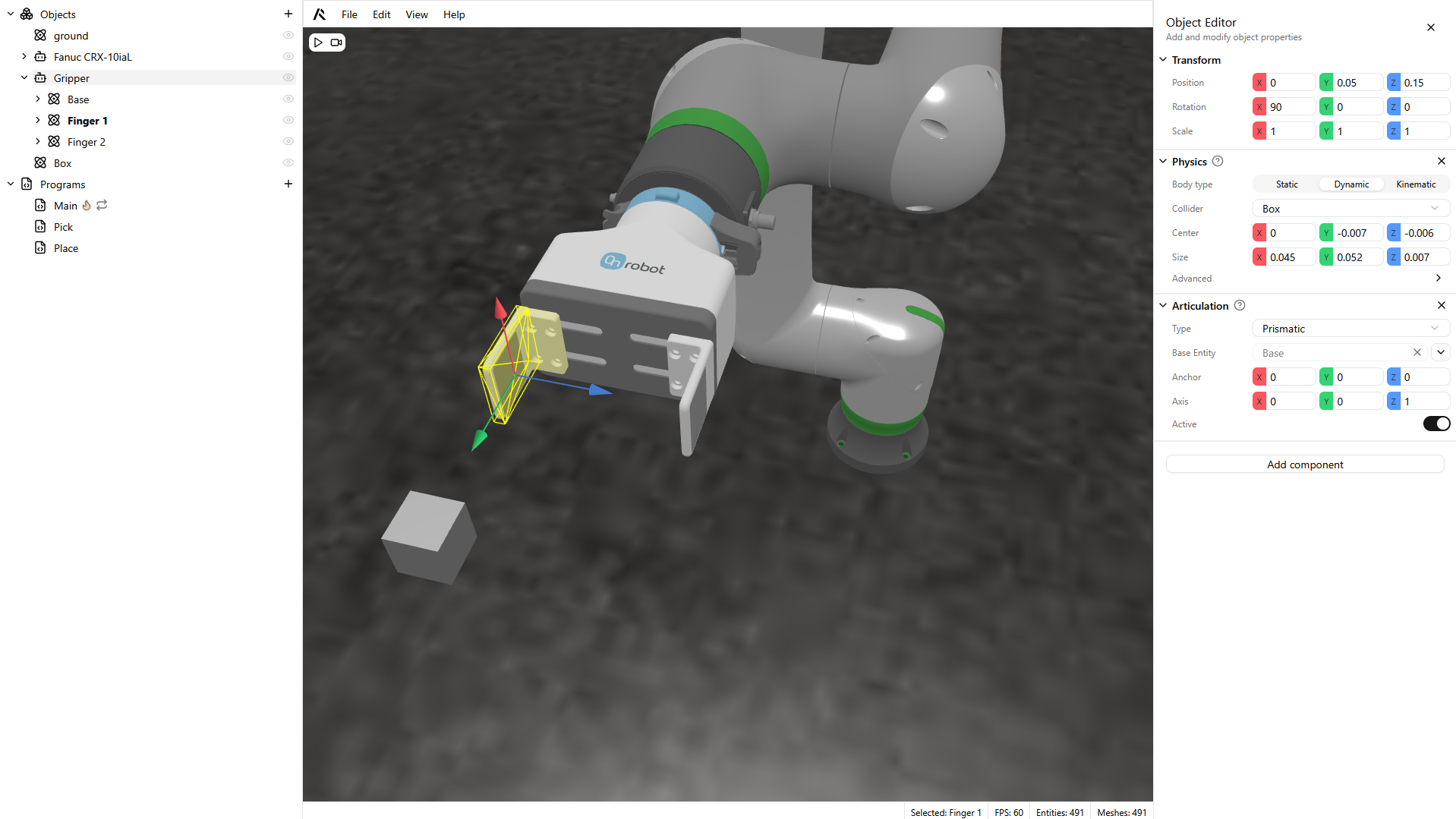
We feature an embedded physics engine that allows you to create realistic, high-fidelity simulations of your automation systems, with focus on:
- Validation of collisions and object interactions
- Testing motion behaviour and mechanical constraints
- Detect singularities and motion issues early
- Simulate real-world dynamics before deployment
Our physics-driven approach makes simulation significantly more intuitive. Instead of manually configuring how objects should move with a gripper, for example, you can simply program the gripper to press and grasp an object naturally, just as you would in a real-world implementation.
Project Could Synchronization
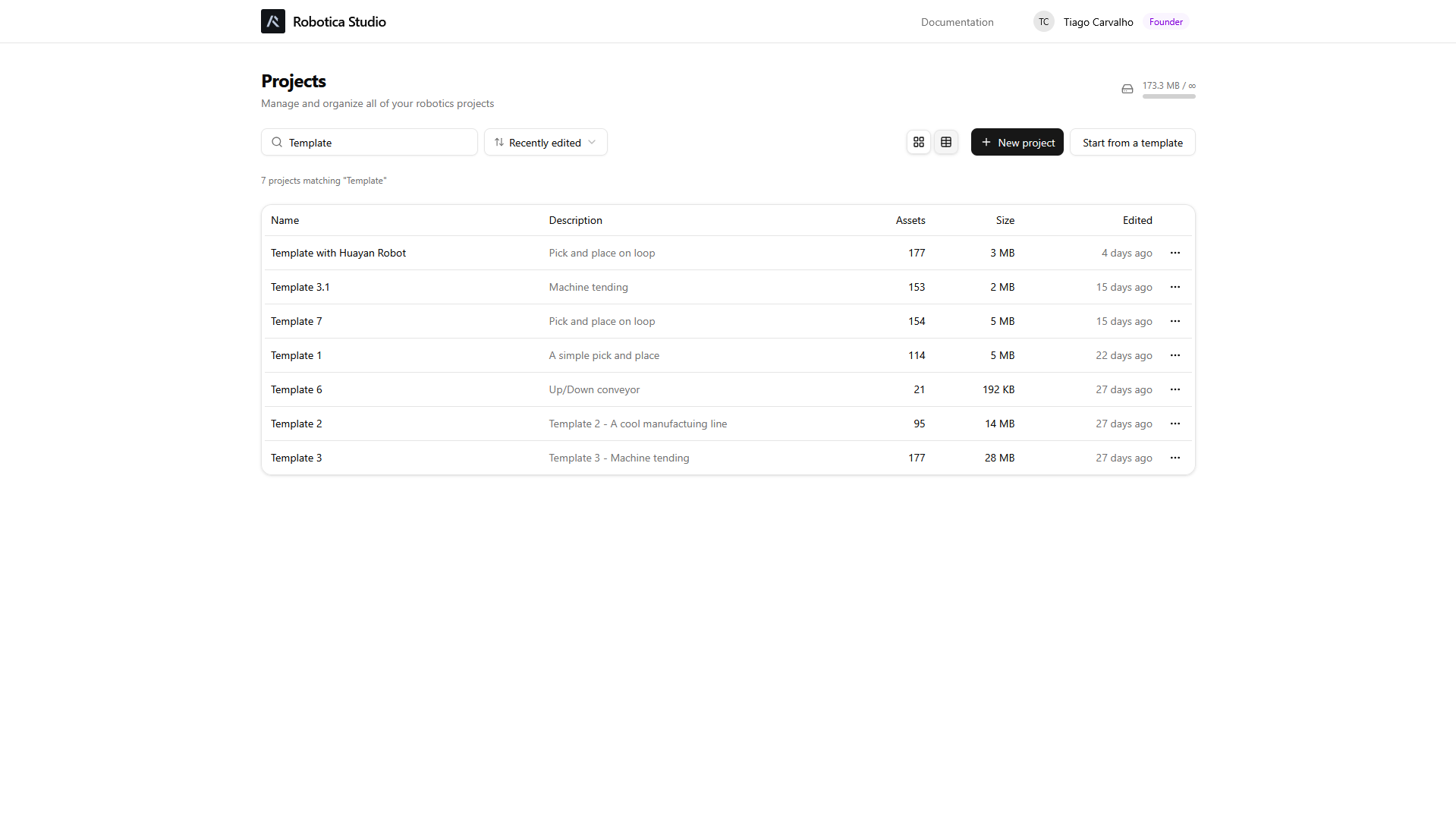
ROBOTICA Studio includes built-in cloud synchronization, allowing you to focus on designing and validating your automation systems without worrying about file or folder management.
Projects are automatically synchronized across devices through our integrated cloud management system, making it easy to access and continue your work from anywhere.
We start with fair storage limits as we continue to learn how our community uses the platform and evolve the system accordingly.
Low code programming
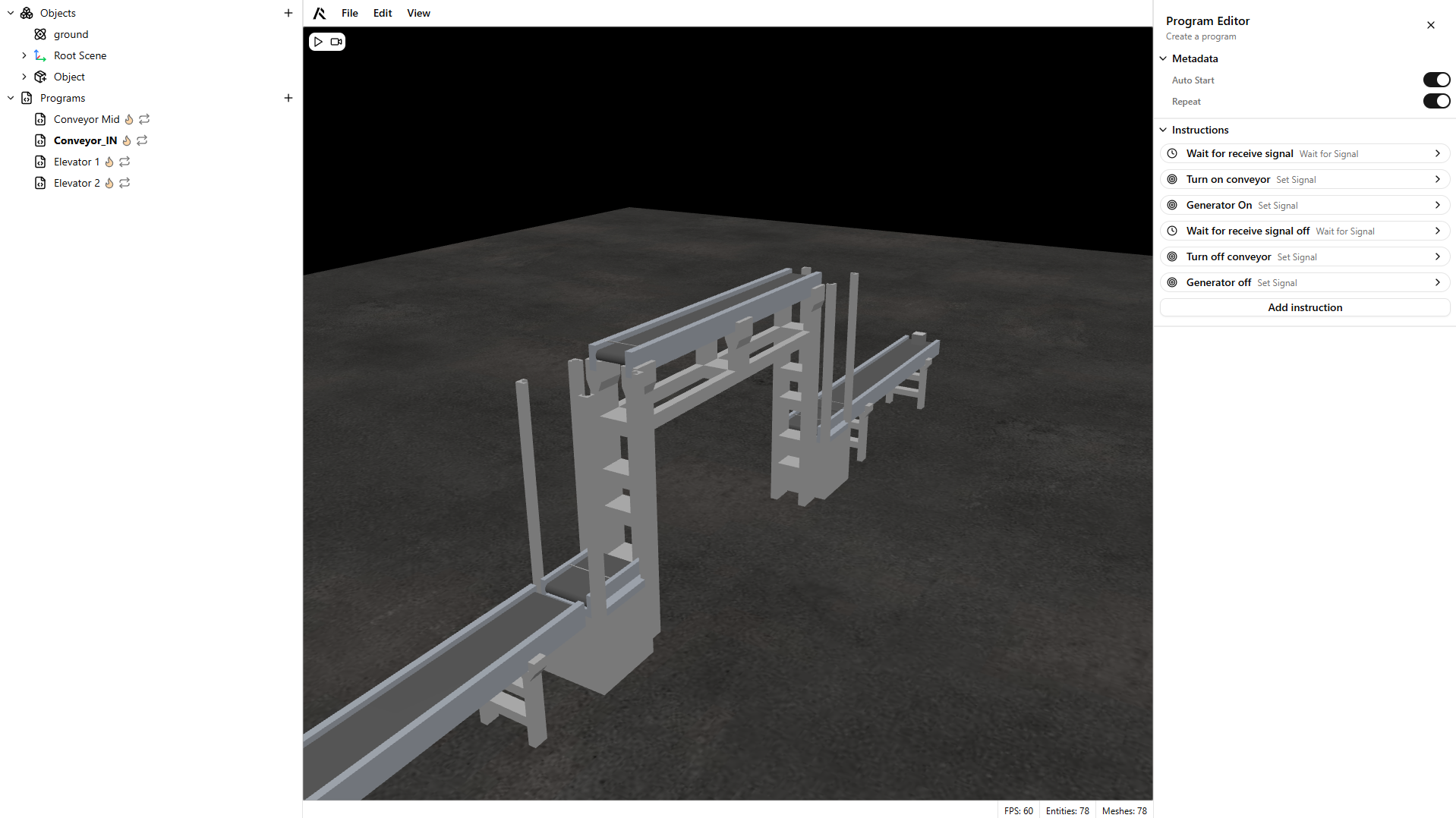
ROBOTICA Studio adopts a low-code approach to help users build simulations quickly and efficiently.
Our visual programming system allows engineers of different backgrounds to participate in building automation logic, lowering the barrier for those with limited programming experience while also enabling faster configuration of simple simulations.
To support development and troubleshooting, we also introduced a debugging system that allows you to monitor your simulation's execution step by step, making it easier to identify and resolve issues when they occur.
Signal based system
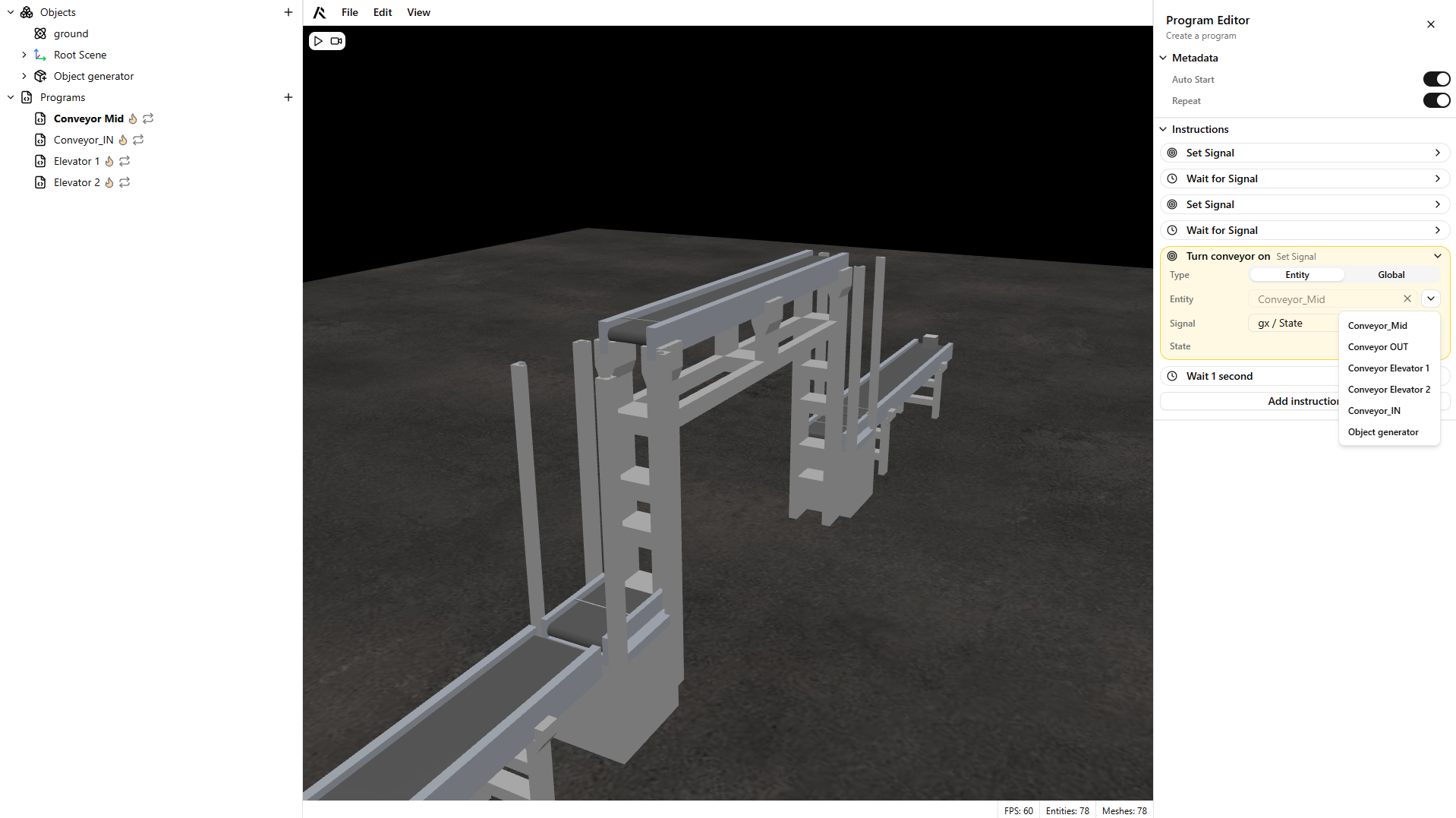
Automation systems rely heavily on signals to coordinate behavior between machines and components.
ROBOTICA Studio embraces this industry-standard approach by implementing a flexible signal-based architecture.
The platform supports two types of signals:
- Global signals, shared across the entire system
- Entity-based signals, attached to specific components such as conveyors, sensors.
This structure allows engineers to design and control complex automation workflows in a way that mirrors real industrial systems.
Get Started with ROBOTICA Studio
Our team is excited to bring this new technology to the market, and we look forward to seeing what our clients and partners will build with ROBOTICA Studio.
Whether you are exploring automation concepts, validating mechanical designs, or developing complex simulation scenarios, we are always happy to support you. If you would like to learn more about the platform or need assistance building your simulations, our team is ready to help.
You can get started today:
- Try ROBOTICA Studio: https://studio.augmented-labs.com
- Explore the documentation: https://docs.augmented-labs.com
- Contact our team: contact@augmented-labs.com
We are just getting started, and we are excited to build the future of automation simulation together with our community.